Diamond in the Rough?

Beauty is in the eye of the beholder, after all. Take a look at these fixer uppers and tell us what you think: Two thumbs up or two thumbs down? It would take a lot of love to bring these stone homes back to life, but the rewards may just be worth the pain and effort.

Forgotten Farmhouse in Frenchtown

Situated on the edge of historic Frenchtown, New Jersey, you will find this stone farmhouse (tax records say it dates to 1875). The home sits on almost 80 acres of secluded farmland that boasts horse trails, wooded areas and even a pond. The three-bedroom farmhouse is in a sorry state, indeed. But the land has such potential — and who wouldn’t love living right across the Delaware River from Bucks County, Pennsylvania!

Hopeless Case in Havre de Grace

Located in the sleepy harbor town of Havre de Grace, Maryland, this patchworked property is being sold for the land, not the home, which dates to 1860. The place is in such a bad state of disrepair that potential buyers must sign a “Hold Harmless & Right-of-Entry Agreement” before entering the property! We’re not sure about you, but we couldn’t bear to tear down this historic structure.

Timeworn Cottage in a Port Town


Not much information exists about this old stone cottage in the woods. It’s age? Hard to say. Maybe circa 1930s-50s? The cozy home is nestled on over three acres of woodland in Huntington, West Virginia, which itself sits at the confluence of the Guyandotte and Ohio Rivers. With a heavy dose of elbow grease and some vision, this dilapidated structure could truly shine. The perfect weekend or summer getaway!

Last Hope for La Loma Treasure

A rare find, this Southwest-style cottage located in La Loma, New Mexico, features solid adobe, stone and block construction. Although this home sits on only 3/4 acres, the seller also has 11+ acres — with water rights on the Pecos River — available nearby. Granted, interiors are a wreck right now, but a handyman could quickly whip this home into shape.

Pioneer Home Turned Rehab Project

This pioneer homestead, constructed of limestone, circa 1878, has a new standing-seam roof and windows. It only needs the touch of an old stone home lover to preserve interiors. The Fredericksburg, Texas, property includes an old smokehouse, a storage building and over 77 acres of lush farmland.

Vote for Your Favorite Old Stone Cottage!

We scoured the market for the most adorable old stone cottages currently up for grabs. Some have been lovingly tended, while others offer an opportunity to flex those remodeling muscles. Take a look at these 10 lovelies and tell us which one you would love to own.

A Story of Old Stone Homes in Tennessee

A Pennsylvanian by birth, I came to live in Eastern Tennessee in 2008. A job planted me there for about five years. Quite lovely country, I thought, but it’s a land of log cabins, not old stone homes. After exploring the countryside, I realized I was wrong.

Ramsey House was my first real experience with a stone home in a Southern state. Breathtaking, it reminded me of many federal-style homesteads I had toured back home. And rightly so. Its original owner, Pennsylvania-born and of Scots-Irish heritage, hired an English-born architect to design and build the house of locally sourced pink marble and grey limestone – most likely in keeping with manses in his home state. Everything I love about old stone homes – intricate interior woodwork, a big walk-in cooking hearth and cozy fireplaces and a grand winding staircase – you’ll find at Ramsey House. Even a ghost or two (wink)!

So I was sitting at my computer today, pondering what to write. And Tennessee, for some reason, popped to mind. I did a search and – boom – up popped two gorgeous old stone homes for sale. Minus some columns and an odd architectural detail or two, these homes would look right at home if nestled on a country back road in New York, New Jersey, Pennsylvania or Maryland.

Wills-Dickey Stone House, Kingsport, Tennessee
Two-foot-thick stone walls. Can you imagine? This graceful lady was built around 1790 by Jacob and Mary Wills in a portion of Tennessee that was once part of Virginia. A two-story limestone dwelling, this mansion sits on over an acre of riverfront property, boasts its own barn, a guest house and four fireplaces and was listed on the National Register of Historic Places in 1973. Inspiration for this home’s design? Jacob was born in Pennsylvania and no doubt learned the art of stone masontry in his home state.

The Peter Range Sr. House
Imagine living in a home built by a Revolutionary War soldier! Peter Range Sr., of German descent and born in New Jersey, moved to present-day Johnson City (lower Knob Creek), Tennessee, with his wife Elizabeth and first child in 1777. He built his first home, a two-story log home, in 1796. That primitive structure forms part of the full basement of the present-day, circa 1804  home, constructed of hand-cut blue limestone. It was built along with a grist mill (Twin Falls), which is now but a memory. The home, listed on the National Register of Historic Places, boasts four fireplaces, interior exposed-stone walls and original wide-planked wood flooring.

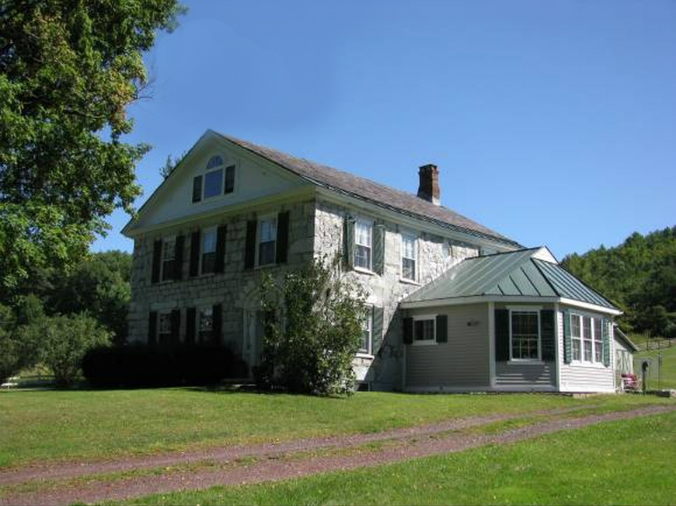
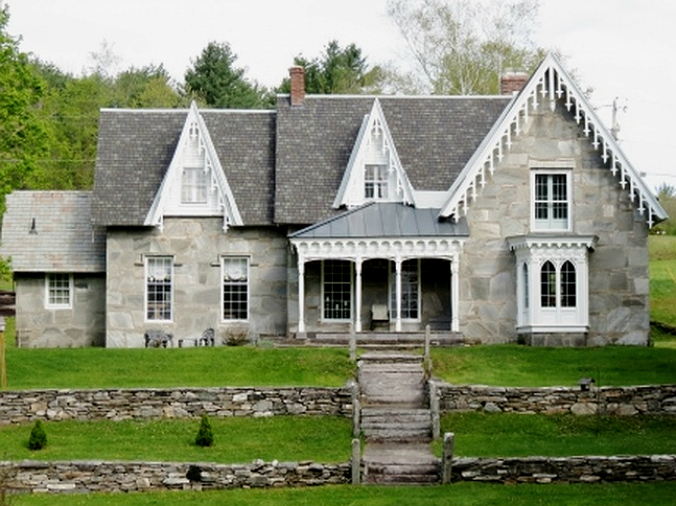
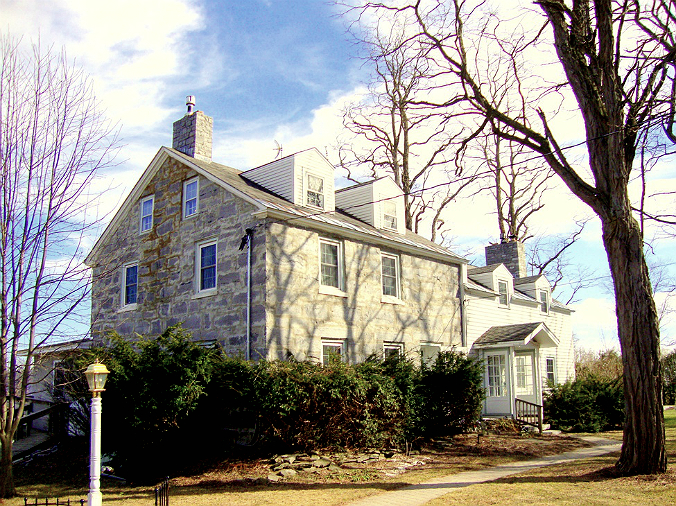
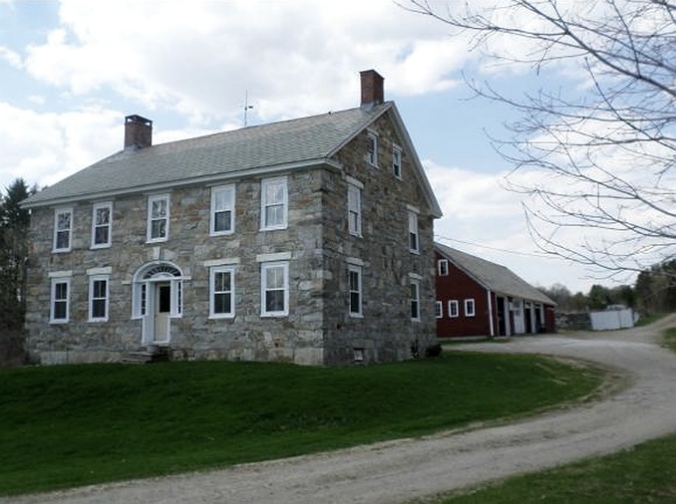
Grey Beauties of Vermont

Holy smokes, Vermont! We had no idea you laid claim to some of the prettiest old stone homes in the country. Check out these stunners — from old-fashioned farmhouses to Greek revival-style mansions. The dreamy grey stone is likely marble, mica schist or granite. These six beauties are all up for grabs. We couldn’t think of a better way to start a brand new life!

Nurturing a Family in an Old Stone Schoolhouse

Just this week, The Baltimore Sun published a story of one couple’s decades-long love affair with an old stone schoolhouse. The building, constructed in 1879 of locally quarried granite and originally coined Baltimore County Schoolhouse No. 3, was converted to a home in the 1940s and then used as an antiques store in the 1990s before the Brickner-Filipczaks took ownership. But now that the couple’s children are grown, they are ready to pass the home on to the next generation of “caretakers”.

Is the thought of living in an old stone schoolhouse your dream come true? Check out these other adorable properties on the market:

Old Stone Castles: Love at First Sight

There’s something so romantic about an old stone castle — the winding staircases, turrets and secrete passageways. And, of course, a ghost or two. Believe it or not, old stone castles do exist in the US — we’ve found several on the market! Take a look at this bunch and tell us which historic home you’d love to call your own!

Save an Old Stone Home

Now’s your chance to live the dream: buy an old stone home at a steal and renovate from inside out to suit your needs. These fixer-uppers require a few cans of paint and some elbow grease, for sure. But the return on investment? Priceless!

Audience participation requested: If you have a few moments, pick a home, click on the image to review the details and then tell us how you would bring your favorite stone treasure back to life.

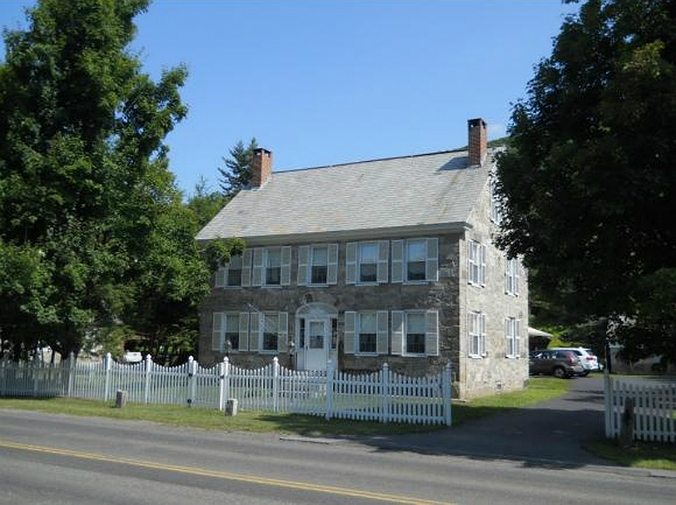
old stone farmhouse for sale in Pipersville, Pennsylvania, fixer upper, as is home for sale

Stone farmhouse in Pipersville, PA, circa 1740


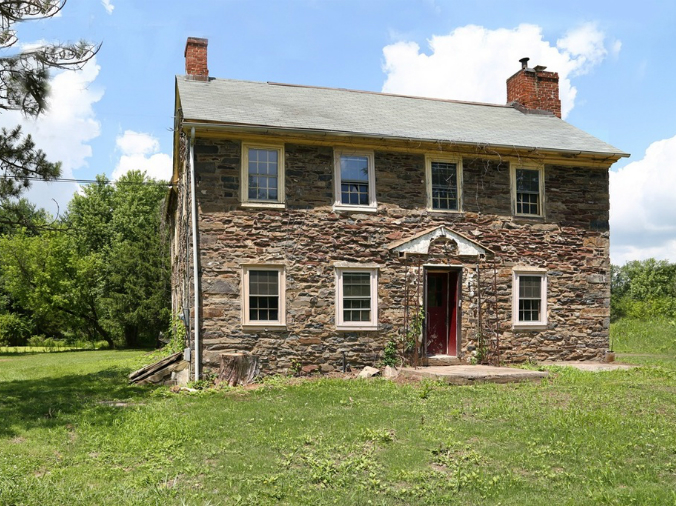
old stone home for sale in Asbury, NJ, fixer upper, as is home

Stone farmhouse in Asbury, NJ, circa 1780


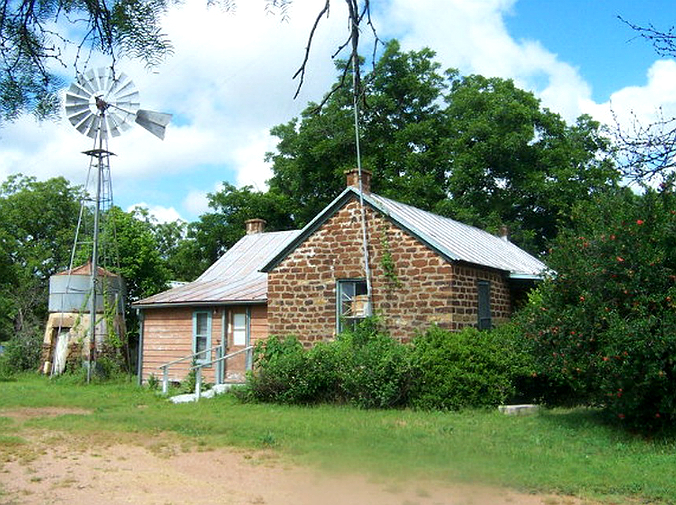
old stone home for sale in Mason Texas

Old stone cottage with windmill in Mason, TX, circa 1900


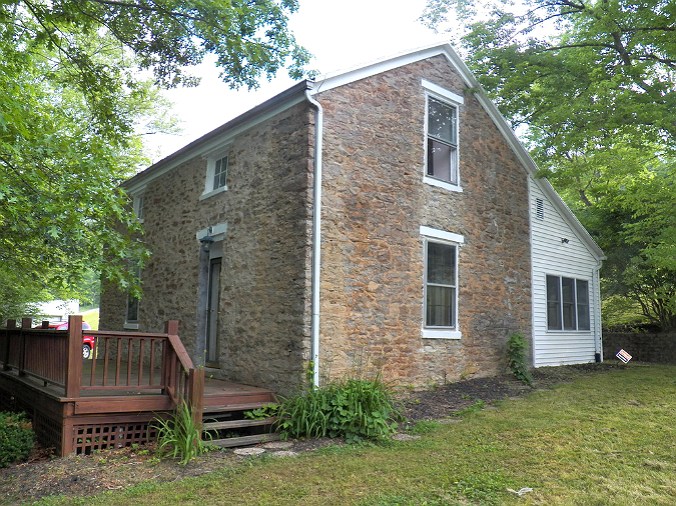
stone cape cod, old stone home for sale, Melbourne, Kentucky

Stone cape cod in Melbourne, KY, circa 1875

Colonial-Era Stone Homes of the Mid-Atlantic

What would it be like to live in a home built during America’s colonial period, before the signing of the Declartation? Would the home’s rich past compensate for the mysterious creaks and cracks, the occasional draft and “improvements” that have done more harm than good?

These Mid-Atlantic homes are looking for new owners. You up for the challenge? Take a look and tell us which one you’d pick.

Year Built: 1705


Known as Holland Hall, this circa-1705 stone home, located in Saugerties, New York, boasts stunning views of the Catskills. The home features three bedrooms and three old hearths that could easily be put back to use.
Most outstanding feature: Original open hearths
Colonial happenings of the year: Virginia became the first colony to establish a comprehensive slave code. The code asserted that slaves were real estate. Benjamin Franklin was born the following year.

Year Built: 1730


This Ellicott City, Maryland, farmhouse, circa 1730, has been passed down through Maryland’s Carroll family (Charles Carroll was a signer of the Declaration of Independence). The home includes exposed stone interior walls and cottage gardens awaiting a green thumb’s touch.
Most outstanding feature: The rustic barn with stone foundation
Colonial happenings of the year: Baltimore was founded in the Maryland colony. The Great Awakening, an evangelical religious movement, swepted through America.

Year Built: 1740


Built in 1740, this Georgian-style millhouse, located in Chester Springs, Pennsylvania, is nestled along a babbling stream. An extensive renovation in 2003 melded the best of old and new.
Most outstanding feature: Proximity to stream
Colonial happenings of the year: The King George’s War erupted overseas. Famine in Ireland sent many settlers to the Shenandoah Valley area.

Year Built: 1750


This Bloomsbury, New Jersey, stone home, constructed in 1750, comes with an attached rancher that you can live in while restoration work is under way.
Most outstanding feature: Lush 1.5-acre lot
Colonial happenings of the year: The population of the American colonies reached one million. The flatboat and the Conestoga wagon improved transportation.

Year Built: 1770


Lagrange Farm, a circa-1770 stone estate located in Stephens City, Virginia, has successfully stood the test of time. With a timber bank barn and over seven acres of land, this property is the perfect place to establish a business – or family retreat.
Most outstanding feature: Acres of pasture
Colonial happenings of the year: The population of the American colonies reached just over 2.2 million people. The Boston Massacre occurred.

Historic Stone Taverns in the Keystone State

Old stone taverns certainly tug at the heartstrings, don’t they? See one and your mind tends to wander off to a place long ago and far away. Can’t you just imagine the scene? A warm fire blazes in the open hearth as locals — from landholders to lowly farmers — huddle around candle-topped tables, discussing politics of the day as tankards of ale slowly take their toll. There’s something nostalgic too, about the notion of the weary traveler, stopping off at a wayside inn after a long journey to find conversation and perhaps a warm supper and a place to lay his or her head.

Early American tavern scene, Colonial tavern, old stone homes, old stone taverns

Figures in a Tavern or Coffee House by William Hogarth

There are many early American taverns still standing (and operating!) in this country. And on occasion,  an tavern-turned-home comes up for sale, the owner hoping to find a thoughtful someone willing to take on the caretaking responsibility for a few more decades.

If you’re currently shopping for an old stone home with a special spirit of hospitality, you’ll want to take a look at these five magnificent properties, located along old toll roads and once-busy thoroughfares in Pennsylvania.

Historic stone tavern, Cumberland Hall, Moore's Tavern, Carlisle, Pennsylvania, old stone homes, Early American tavern

Moore’s Tavern, Carlisle, Pennsylvania

Cumberland Hall, an estate nestled on 2+ acres, was once known as Moore’s Tavern. The Carlisle, Pennsylvania, limestone home was built by James Moore in 1788 and operated as a tavern from 1795 to 1885. The home boasts 17 rooms, eight working wood-burning fireplaces, a rebuilt barn and a vintage brick tollhouse.
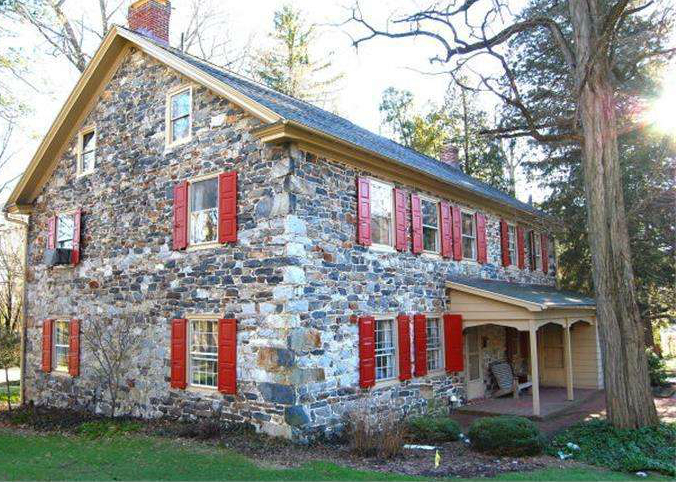
Gechter Tavern, old stone tavern, Early American tavern, Reading, Pennsylvania, old stone homes

Gechter Tavern, Reading, Pennsylvania

Originally known as the Gechter Tavern on the Oley Toll Road and steeped in Civil War history, this circa-1750 home, located near Reading, Pennsylvania, boasts four bedrooms, its original springhouse with walk-in fireplace, a bank barn and a wagon shed.

Historic stone tavern, LeVan Tavern, Kemp Hotel, Kutztown, Pennsylvania, old stone homes

LeVan Tavern, Kutztown, Pennsylvania

In 1740, Daniel LeVan, an immigrant from the Netherlands, built a stone home along a highway that connected the Pennsylvania towns of Reading and Easton. As traffic grew, so too did the size of his home until finally, in 1765, Daniel opened The LeVan Tavern, which would go on to host both John Adams and George Washington. After decades of serving as a hotel/bar/restaurant and, finally, as a yoga studio, the property is up for sale. Although the building is zoned commercial, second-floor living quarters are available for a brave soul willing to bring this historic tavern back to life.
Johnson-Hatfield Tavern, old stone tavern, historic tavern, Brier Hill, Pennsylvania, old stone homes

Johnson-Hatfield Tavern, Brier Hill, Pennsylvania

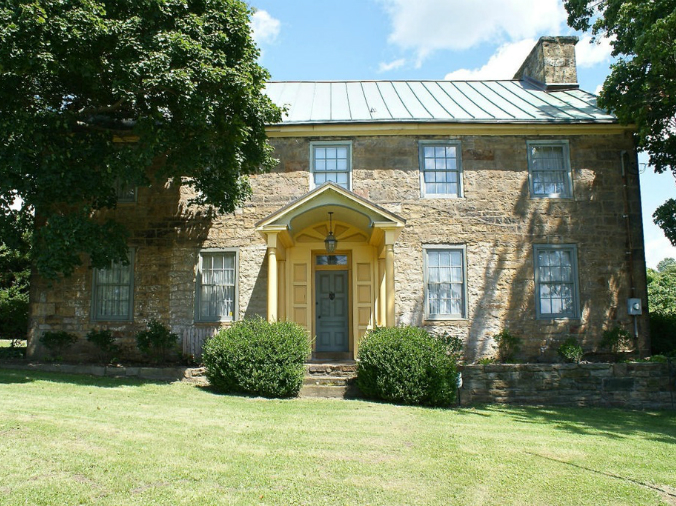
A stop for 19th-century travelers along the National Road in Fayette County, Pennsylvania, The Johnson-Hatfield Tavern was built in 1817 by Randolph Dearth for Robert Johnson. The building served as a tavern through 1855 and thereafter as a private residence. Listed on the National Register of Historic Places, the home sits on 3.75 acres and features a historic stone springhouse.
John Hunter Tavern, John Hunter Inn, old stone inn, Oley, Pennsylvania, old stone homes

John Hunter Inn, Oley, Pennsylvania

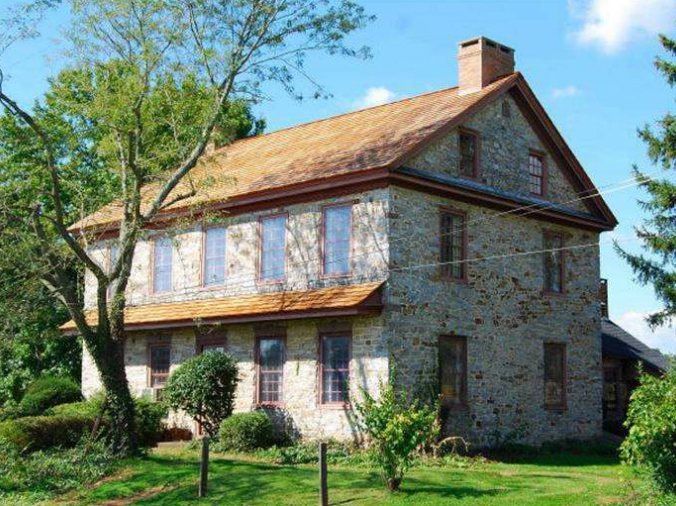
Built in 1768 by Johannes Jaeger (John Hunter), this Georgian-style sandstone home located in Oley Township, Berks County, Pennsylvania, doubled as a wayside inn during the colonial period. The home features 12 rooms and four fireplaces, plus an 18th century log cabin (not original to the site), a wagon shed and an English-style barn.

To learn more about the importance of the tavern or inn in the lives of Early Americans, take some time to read this informative post on the Gothic Curiosity Cabinet blog.

Old Stone Homes in the News

Three properties popped up in the news this week: one in desperate need of repair and two others of historic significance. Let’s take a look.
A Stone Home in Danger
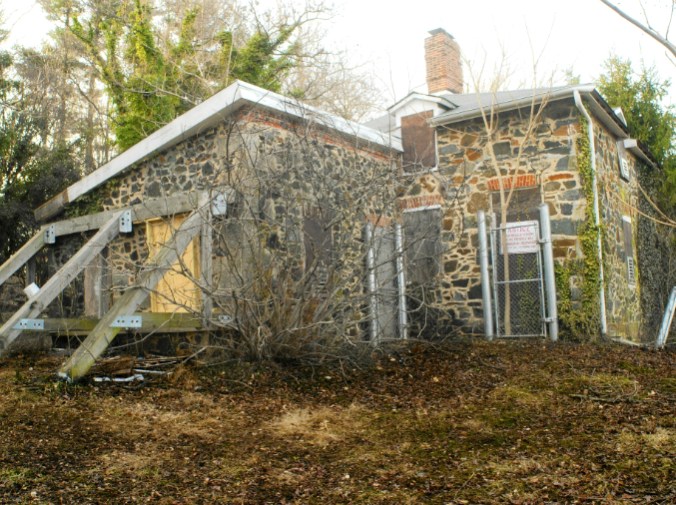
Lapole Tenant House, Farmlands estate, Cantonville, Maryland
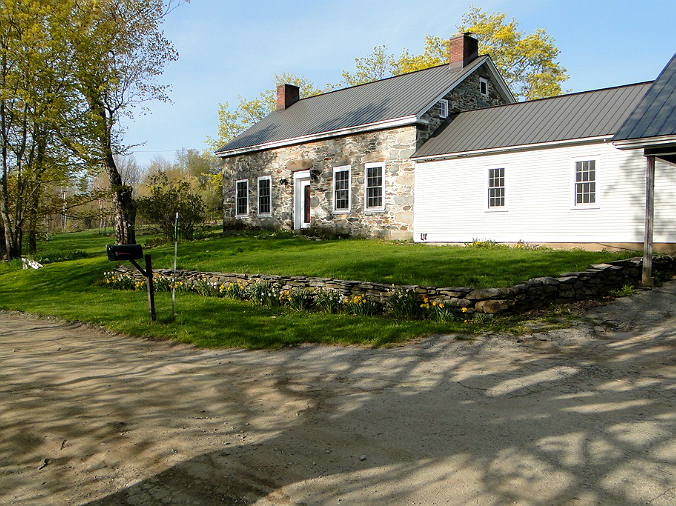
The Lapole House (Lurman House) in Catonsville, Maryland, may not look like much at first glance. The boarded-up stone cottage is located on the grounds of Catonsville High School but was once part of a much larger estate. The story starts with Edward Dorsey, who gave the name “Farmlands” to the area in the late 1700s. He passed the large tract of land to his son, Hammond, who built a mansion on the site in the 1790s. In 1820 the house with six hundred acres was sold to Henry Sommerville, who renamed it “Bloomsbury Farm”. In 1848, Gustav W. Lurman, Sr. purchased the estate and restored its original name. The Farmlands estate passed down through the Lurman family until 1948 when Miss Frances D. Lurman sold the last 65 acres to the Board of Education. The main house and most outbuildings were demolished in 1952 to make way for the high school. The tenant or gardener’s cottage, once the home of estate caretakers Charles and Ida Mae Lapole, is all that remains today. Local resident Jim Jones is raising awareness in hopes that the cottage can be saved from the ravages of time, weather and vandalism.

A Stone Home That Needs an Owner
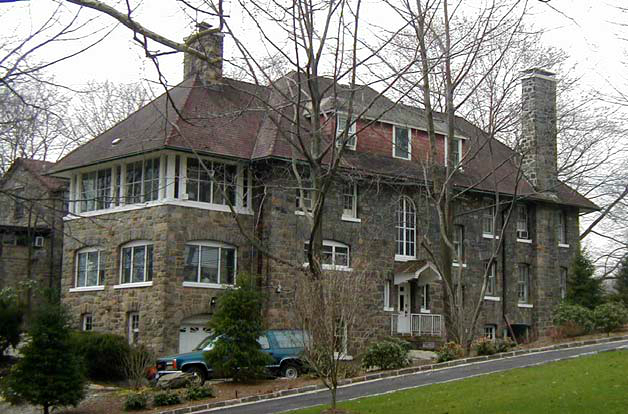
Stone mansion, Fieldston Historic District, Bronx, New York, old stone home
It’s a mansion in fine condition. The only thing lacking is an owner. And for $3.7 million the home could be yours! Located in Fieldston, a privately owned neighborhood in the Riverdale section of the northwestern part of the Bronx, this 100-year-old home of solid fieldstone construction features eight spacious bedrooms, 5.5 bathrooms, a formal dining room and a renovated eat-in kitchen. The Craftsman-style home, designed by architect William B. Claflin and built for Columbia University professor George B. Pegram, sits at the top of a 1/2-acre sloping, terraced lot and exists within the Fieldston Historic District.

A Stone Home That Wants to Tell Its Story
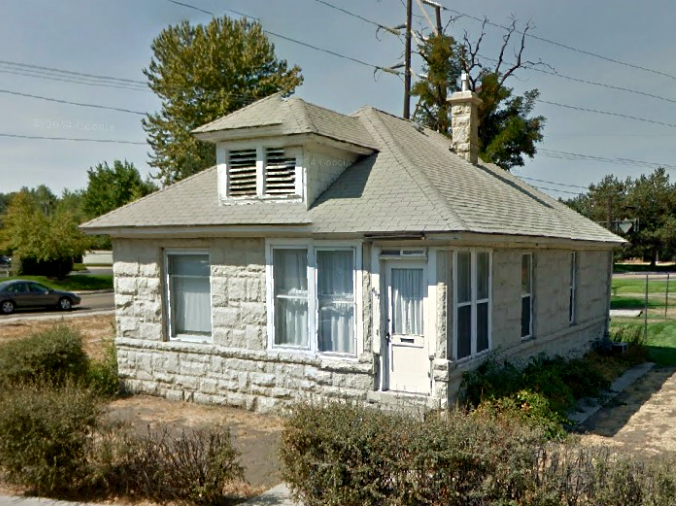
River Street neighborhood, old stone home, sandstone, Boise, Idaho, Erma Andre Madry Hayman
The 900-square-foot home at 617 Ash Street in Boise, Idaho, was once surrounded by timber-framed homes in a bustling neighborhood coined River Street. Built in 1907 of sandstone, the house became home to Erma Andre Madry Hayman and her husband Lawrence in 1943. Erma raised a large family in the small home and lived to the ripe old age of 102. After her death in 2009, grandson Richard Madry sold the house and property to the Capital City Development Corporation. Hopes are to protect the home via a National Trust for Historic Preservation designation and learn more about the vibrant multicultural working class community via an archeological dig at the homesite, led by the University of Idaho field school.