A Quaker Estate That Grew From a Humble Log Cabin

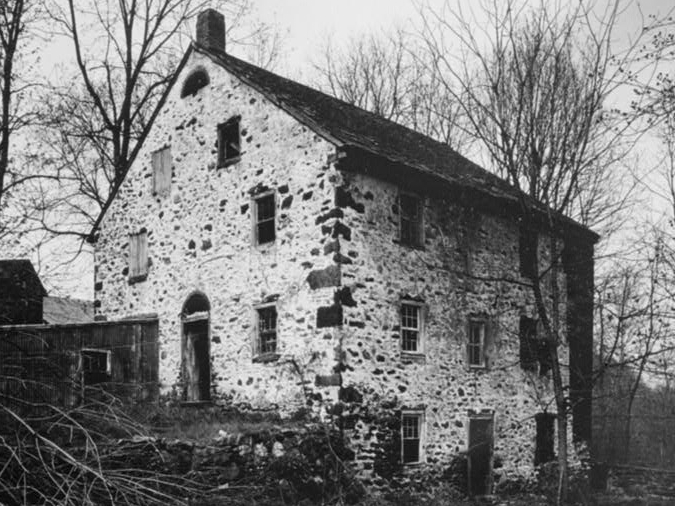
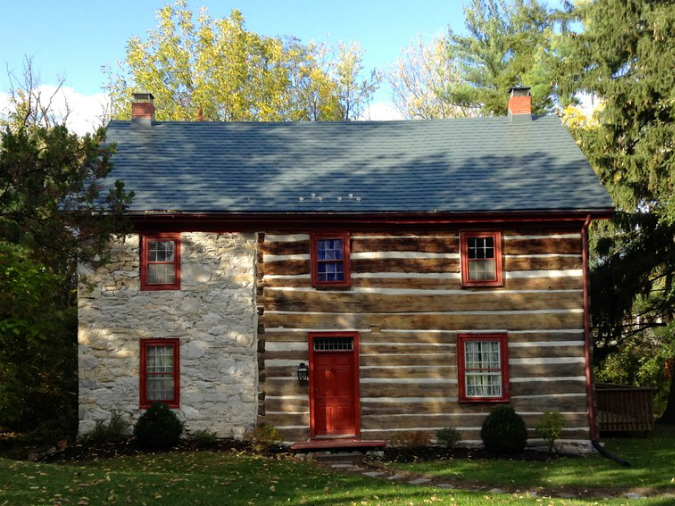
The Richard Wall House, circa 1682

The Richard Wall House, circa 1682. Source: Eric and Noelle Grunwald.

We have a devote Quaker to thank for the oldest stone home in Pennsylvania. Richard Wall came to America in the mid-summer of 1682, after purchasing 600 acres of land directly from William Penn. His land grant, along with 13 others, came to form Cheltenham Township, named after Cheltenham, England.
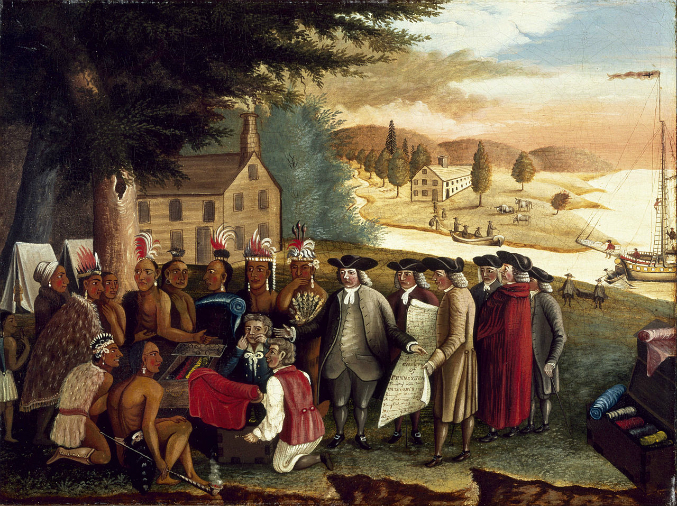
Penn's Treaty with the Indians

Penn’s Treaty with the Indians, c. 1830-1840, an oil-on-canvas painting by Edward Hicks

Wall’s home, coined “The Ivy” for the series of vines that once climbed its stone walls, certainly played its part in the early history of America. The humble Elkins Park abode served as one of the earliest Quaker meeting houses (and wedding/reception site for families within the congregation) and, later, a very important stop along the Underground Railroad.

And like most old stone homes in the states, the Wall House was a work in progress – at least for the first 245 years of its life. In 1682, shortly after arrival in Pennsylvania, Richard Wall built an 18’ x 30’ two-story log cabin with grey fieldstone end and fireplace. This style was in keeping with William Penn’s own suggestions on home style and construction and adapted from methods learned by the first wave of Quakers who migrated to New England during the 1650s-1670s and brought the building style back with them to England. (See our feature on construction method by region; New England stone enders). Subsequent tweaks and additions to the home came in 1730, 1760, 1760-1790 (when the log portion was removed), 1805, 1860 and 1927.
John Wormley's family home Camp Hill Pennsylvania

The original portion of the Richard Wall Home, constructed in 1682, may have looked quite similar to John Wormley’s family home, a circa-1769 log cabin located in Camp Hill, Pennsylvania.

After serving as the residence of four families, the property was purchased by Cheltenham Township in 1932 and served as the home of township managers. In 1980, the Cheltenham Township Historical Commission took the property under its wing and today operates a museum of local history at the site.

Resources:
Richard Wall House Museum
Restoration Offers House Historic Future by Rhonda Goodman

An Old Stone Cottage to Call Your Own

Who doesn’t love an old stone cottage, nestled on a hilltop or situated within a town’s historic district. For some, it serves as the entree into historic home ownership; for others (singles, couples minus kids and retirees) it’s the ideal way to live.

Today, we present some of the most adorable stone cottages currently on the market — all under $300K and circa 1900 or older. Looking to adopt a little stone dream home of your own? Take your pick from this batch of nine beauties. View in slideshow mode.

Artistry of the Early American Stonemason

Stonemasons, Fort Worth, Texas

Stonemasons, circa 1906, Fort Worth, Texas. Source: Hometownbyhandlebar.com.

The earliest American homes were built with stones gathered from open fields or unearthed while a farmer tilled his land. These stones were not shaped with tools, but cobbled together as-is, with mortar used to seal — and compensate for inconsistencies in stone shapes and sizes. The most smoothly faced stones were reserved for the exterior, front-facing sides of stone walls.

Once we had our footing in this new world, we refined the building process and quarried stones for home construction. Enter the stone mason. Once stone blocks were rough cut from the face of a rock quarry, the mason “dressed” or “faced” the stones to suit construction needs.

Old Stone Wall Types

Wall types, clockwise from top left: Fieldstone, rubble and coursed rubble. Source: stone.poplarheightsfarm.org.

To rough-face a stone, the mason first used a mashing hammer to trim away any projections that would prevent the stone from being laid in a straight line. Next, following straight lines he marked with a square, the mason would fine tune his work by trimming away additional stone with a pitching tool and mallet. To smooth-face a stone, a pick was used in place of a pitching tool.

Once all that pounding, trimming and chiseling was done, wall height and width were staked out with string, mortar (a “mud” made by mixing together lime, sand, hair and water) was prepared, trenches were dug and stones set in place, using smaller stones (i.e. gallets) to fill voids between stones and mortar to set the work in place. One part skilled craftsman and one part artisan, the stonemason could envision a design, face stones and then set them in a tightly woven, incredibly intricate pattern that required little mortar to stay put.

Old Stone Mill Rubble Style Stonework

Example of random-coursed rubble walls: James Mendenhall Mill, New Castle County, Delaware, circa 1826. Source: mchhistory.blogspot.com.

Rubble is probably the best example of early quarried and rough-faced stone. Rubbled stones retained their irregular shape and size, but required less mortar as they were precisely pieced together. Examples include random-coursed rubble, similar in appearance to a jigsaw puzzle, and regular-coursed rubble, which created continuous horizontal joints.

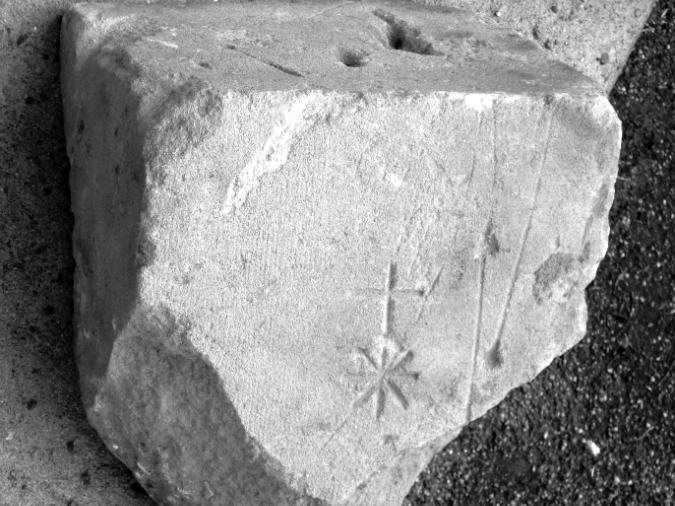
As masonry improved, rubble was replaced by tooled blocks that were used to build even-coursed walls. The stonemason would “sign” his artwork by chiseling his maker’s mark into an individual stone, cornerstone or lintel – a lasting reminder of his skill and craftsmanship.

Mason's Mark Cornerstone Old Stone Homes

Mason’s mark on quoin or cornerstone. Source: David Sankey.

Resources:
Masons and Bricklayers
Historic Stonework by William Kibbel III, The Home Inspector
Early American Architecture: From the First Colonial Settlements to the National Period by Hugh Morrison

A Connecticut Home With a Native American Connection

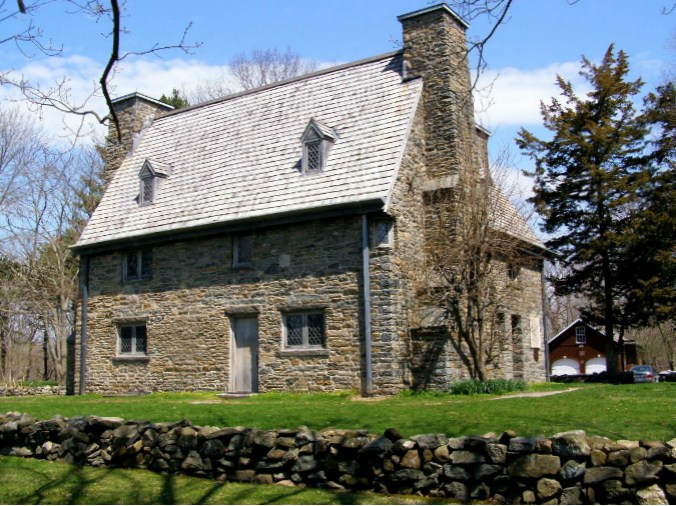
Henry Whitfield House Guilford CT

Henry Whitfield House by Jerry Dougherty

The Henry Whitfield House, located in the village of Guilford, is said to be the oldest dwelling in Connecticut and the oldest stone home in New England. It served as the family residence of Reverend Henry Whitfield, who, along with a group of Puritans fleeing religious persecution in England, founded the plantation of Menunkatuck (later, Guilford) in 1639.

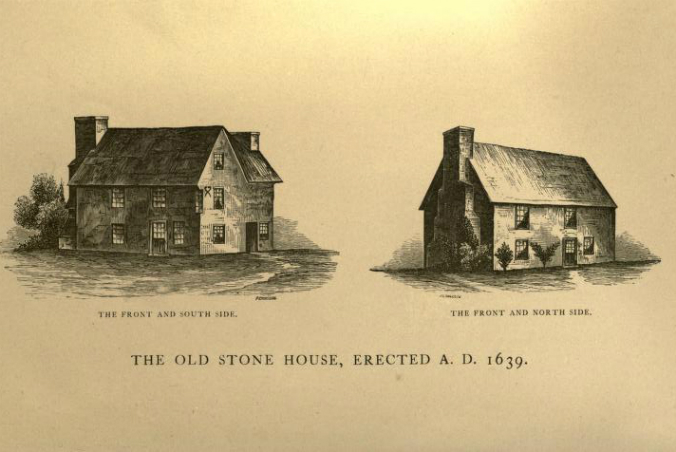
Henry Whitfield House Guilford CT Early Illustration

Whitfield’s home is impressive for its time and location. The two-story structure (one of four stone homes that served as community leaders’ residences) doubled as a fort, a church and a gathering place for settlers. Fashioned in the post-medieval domestic style popular in England at the time, the home features 3-foot-thick battered stone walls, massive stone chimneys, a steeply pitched wood-shingled roof and casement windows.

What often goes untold is the story of the home’s connection to Native Americans. The land that comprises the original portion of the settlement was purchased from a female chief named Shaumpishuh. Her small band of 47 people, the Menunkatuck, derived from the larger Quinnipiac tribe; she sought to sell her tribal land in an effort to escape persecution from bands of warring Pequot and Mohawks.

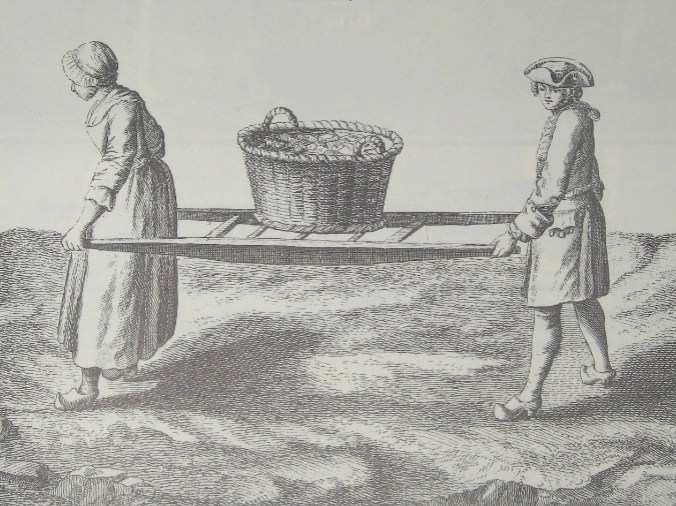
Example of Hand Barrow

And although carpenters, masons and home builders from neighboring settlements were called on to assist in the construction of Whitfield’s home, Native Americans who chose to remain behind after the land transfer bore the burden of hauling the heavy fieldstones to the home site. They managed this job by first gathering stones from a ledge called Griswold’s Rocks, piling them atop hand-barrows (example shown above) and carrying the heavy loads along an ancient causeway cut through a swamp to the home site, nearly 1/4 mile away.

We might conjecture that these native peoples also contributed to the home’s construction, as the majority of early settlers in Guilford were farmers (coined “planters” in early documents).

Resources:
The History of Guilford, Connecticut
A History of the Plantation of Menunkatuck
The Henry Whitfield State Museum
Henry Whitfield House Inventory of Records
Henry Whitfield House
Rev. Henry Whitfield
Oldest Stone House in New England: Henry Whitfield Museum

Old Stone Homes That Will Steal Your Heart

We scoured the market to find old stone homes that would suit the DIYer, someone who has a soft spot for all things early American. These magnificent examples of Colonial and Federal-style architecture are in need of serious TLC (and perhaps the demolition of an awkward addition or two). But just imagine the possibilities! Granted, each home is a bit off the beaten path, but definitely the makings of a great country getaway. Take a peek at our slideshow and tell us what you think!

A Bond Not Easily Broken

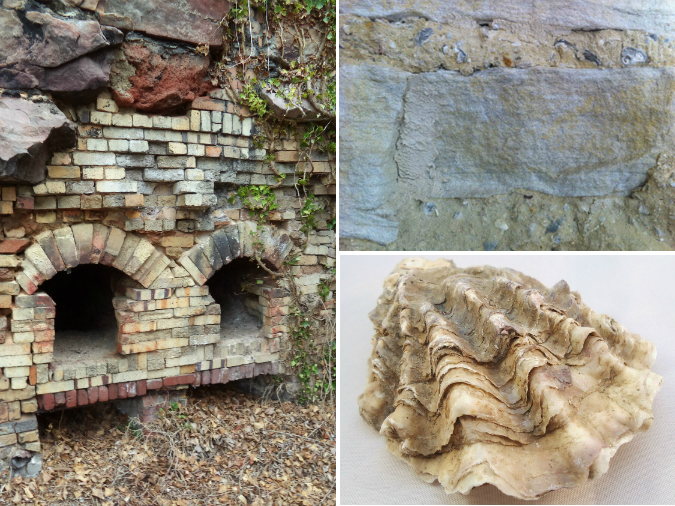
Lime mortar made with oysters

Photos, clockwise from left: Abandoned lime kiln in Virginia by Abandonedcountry.com, oyster shells in lime mortar by Jacqui Newling © HHT, oyster shell by BeaKez

So what was the “glue” with which the earliest settlers built their fieldstone homes?

Clay or clay mixed with chopped straw or animal hair would have been used to build the earliest foundations and interiors of chimneys, but this concoction would not have been strong enough to waterproof walls, fill gaps between stones and act as a cushion as walls settled. For that job, settlers needed lime, which when incinerated in a kiln and reduced to ash, was mixed with water and sand to create a superior mortar. The best sources of lime in early America? Natural lime deposits and seashells, whether combed off the beach or removed from an abandoned Native American rubbish heap (also called a kitchen midden).

So when we boil it all down, we may have both the land and the sea to thank for old stone homes.

Resouces:
The Early Domestic Architecture of Connecticut by J. Frederick Kelly
Indiana Folklore: A Reader, edited by Linda Dégh
The Availability of Lime and Masonry Construction in New England: 1630-1733 by Paul B. Jenison

An Early German Stone Home Too Far Gone?

Endangered Old Stone Home Christian Herr II House Lancaster County

Christian Herr II House, Lancaster County, Pennsylvania, Photo, Lancasteronline.com

The Christian Herr II House, a two-story stucco-over-stone home located in Lancaster County, Pennsylvania, was just added to the 2015 Watch List of Most Threatened Historic Properties in Lancaster County by the Lancaster County Preservation Trust. The oldest portion of the home dates to 1734 and was built by the son of Christian Herr I, an early settler who built the Hans Herr House, the oldest original Mennonite meeting house still standing in the Western Hemisphere.

According ot owners Randy and Christine Andrews, who have been renovating the home for the past six to seven years, the home suffers from two bowed beams (one significantly cracked), deteriorating stone and mortar and the effects of poorly handled additions/alternations. The couple would like to demolish the home and build new, a plan recently approved by their local planning commission. The Andrews said existing details and materials would be salvaged for use in construction of the new home.

Local historians hope to come to a compromise with the couple: to save the oldest portions of the home (circa-1734 and 1760) and/or the most important architectural details, namely the original attic beams, entrance and cellar.

“Situated on the southern portion of the original 530 acres purchased from William Penn (1644-1718), this house is one of the oldest still standing of those built by the second generation of Lancaster County’s earliest settlers,” says the trust. “Even though changes have been made to this house over the years, it still reflects the Germanic architectural style of its roots.”

What would you do? Bear the financial burden and restore at all costs or raze and build a new home that reflects the past?

The Story of Stone and Early American Home Styles

An old stone home is a reflection of its builder’s heritage and masonry skills as well as the region in which it was built. Let’s explore materials and home style as we tour the earliest stone homes to appear along or near the East Coast of North America.

Region: New England

In the mid-1600s, the population of New England was primarily English, so home styles were pretty simple, stripped of ornamentation and timber-framed (timber being the most readily available material). Design had purpose: A pitched roof shed heavy snow loads and a central fireplace kept the home warm and cozy during cold New England winters. But not many stone homes. Why? Although fieldstone was plentiful (we know this by virtue of old dry-stacked stone walls that still exist throughout the region), the ingredients to make a good mortar were scarce. Rare examples appear where limestone was plentiful (primarily Rhode Island and southern Massachusetts) and took the form of what came to be coined “stone-siders”.

Photo: Clemence-Irons House by acanyc, Johnston, RI, limestone construction, Post-Medieval English style

Photo: Clemence-Irons House by acanyc, Johnston, RI, limestone construction, Post-Medieval English style

Region: Central Hudson Valley and New Jersey

Moving on to the Hudson Valley, we see a slight change in style and construction. Dutch and Flemish settlers were more skilled in pairing materials, specifically fieldstone with brick, timber or both. To construct the earliest stone homes, settlers rough-cut stone and sandwiched it between layers of hair- or straw-bound clay to build walls that measured up to three feet thick. Lime mortar, fashioned from oyster shells or lime deposits, and finely masoned stones and intricately laid brickwork eventually replaced more primitive building materials.

Mount Gulian stone home

Photo: Mount Gulian by Howard Dale, Beacon, NY, red and brown sandstone construction, Dutch colonial style

Region: Delaware River Valley

Further south in the Delaware Valley of Pennsylvania, Swedish, Scots-Irish and German settlers initially built log structures. It was the German immigrants who truly put their stamp on the stone home design. The earliest structures featured steep roofs, central fireplaces and small square windows flush set against thick stone walls. Often, homes were built over springs that provided running water or into hillsides (hence the term “bank house”) that kept interiors cool during hot and humid summer months.

Hans Herr House old stone home in Lancaster County

Photo: Hans Herr House by Historyplaces, Willow Street, PA, sandstone construction, German colonial style

Resouces:
Early American Architecture by Hugh Morrison
The History, Science and Poetry of New England’s Stone Walls
Hudson Valley Architecture
Stone Houses of Eastern Pennsylvania
Historicnewengland.com
Architecture, Furniture, and Silver from Colonial Dutch America
Common Building Types: Houses, Agricultural Outbuildings, Mills

A Farmhouse Fashioned of Fieldstone

What is the oldest (still-standing) stone home in the United States? In a state-by-state series, we’ll explore that very topic while highlighting some of the country’s most magnificent structures. Delaware and a little stone farmhouse lovingly referred to as the “Old Swedes House” is the first stop in our tour.

Hendrickson House Delaware

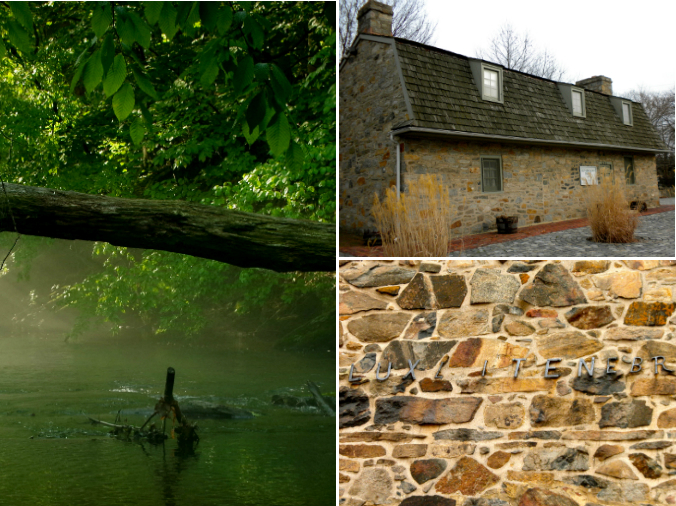
Photos, clockwise from left: Crum Creek by Thomas, Hendrickson House, Iron Lettering on Old Swedes Church

Hendrickson House, Wilmington, DE, circa 1690
This 1 1/2-story farmhouse was built by Swedish settler Hendrick Johansson as a wedding present for his son Anders. Originally nestled along the bank of Crum Creek (from the Dutch, meaning “crooked creek”) in Chester County, Pennsylvania, the home was dismantled in 1958 and rebuilt on its present site at Old Swedes Church.

Although Swedish settlers (the first to establish themselves in Pennsylvania) were credited with introducing the log cabin to America, this home was constructed of fieldstone, which would have been plentiful in and around the homesite. Hendrickson House is a fine example of Swedish Colonial style and originally featured one large room on the first floor and one large bedroom above. The home was owned by four generations of the Hendrickson family before it was sold in 1788 for use as housing for tenant farmers.

“The Crum Creek history reports that the stone house measured 30 by 20 feet and faced southwest overlooking Crum Creek and the Delaware River across to New Jersey. In the center of each of the two longer walls, front and back, was a door, flanked by a window on either side. The gambrel roof was supported by the end walls and by heavy, hand-hewn pine beams which extended two feet beyond the face of the front and rear walls to form protective eaves over the first floor doors and windows. Inside, the northwest wall was completely filled by a huge fireplace, an adjacent wood closet (fed by a hatchway to the outside), and in the right-hand corner, a narrow, winding stair leading to the second floor. The large upstairs room was used for sleeping quarters and was heated by a second fireplace.” Source: Genealogy.com